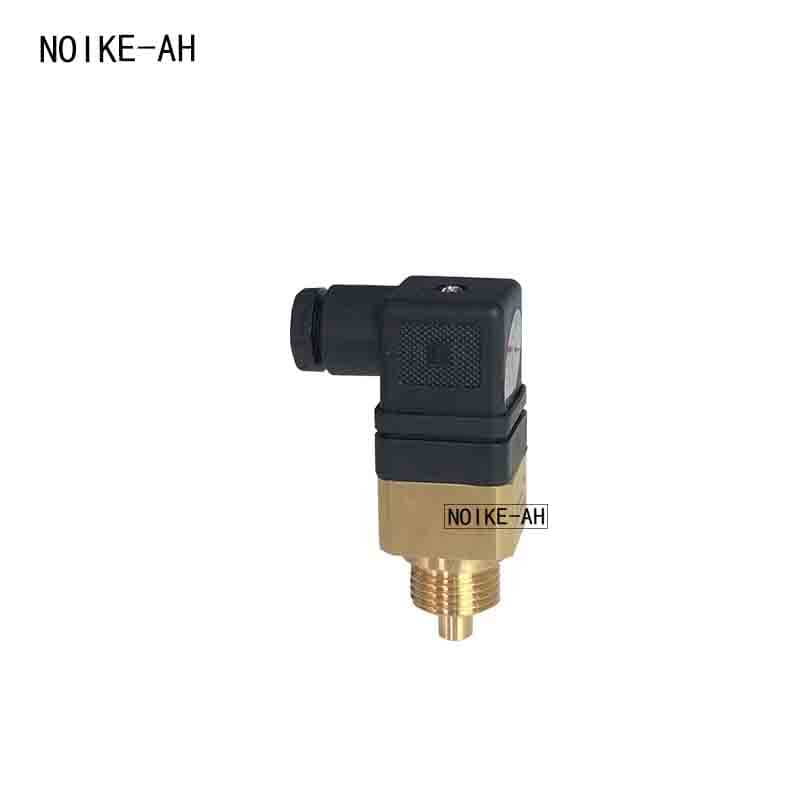
The instructions for explosion-proof flow switches roughly include the most common principles, application scenarios, and so on.
Introduction to the principle of explosion-proof flow switch (taking electronic explosion-proof flow switch as an example):
The principle is mainly based on the thermal principle, which includes two resistors inside a closed probe, one of which is heated as the detection resistor and the other is not heated as the reference resistor. When the medium flows, the heat on the heating resistor is carried away, and the resistance value is changed. The difference between the two resistors is used as the basis for judging the flow rate. The probe adopts an anti scaling coating, which can prevent the adhesion of scale, rust and other dirt in the pipeline, with stronger anti fouling ability and more stable operation.
No matter what principle the explosion-proof flow switch is based on, it will have a corresponding explosion-proof level. According to the explosion-proof level and classification, it can be applied in hazardous situations that require intrinsic safety or explosion-proof. It is used to automatically protect equipment and pipeline systems from damage caused by reduced or interrupted flow. This is also the most important consideration when choosing an explosion-proof flow switch.
Explosion proof flow switch manual (explosion-proof level)
Explosion proof flow switch NK33EX300
Appendix: IEC Explosion proof Rating Standards
IEC explosion-proof grade standard format: Ex (ia) Ⅱ C T4
Explosion is the sudden transformation of a substance from one state to another through physical or chemical changes, releasing immense energy. The energy released at a rapid speed will cause violent impact and damage to surrounding objects.
The three conditions that must be met for an explosion:
1) Explosive substances: substances that can react with oxygen (air), including gases, liquids, and solids. (Gas: hydrogen, acetylene, methane, etc.; Liquid: alcohol, gasoline; Solid: dust, fiber dust, etc.) 2) Oxygen: air. 3) Ignition sources: including open flames, electrical sparks, mechanical sparks, electrostatic sparks, high temperatures, chemical reactions, light energy, etc.
Why explosion-proof
Classification of Explosive Hazardous Gases
According to the minimum spark energy that may ignite, explosive gases are classified into four hazard levels using the International Electrotechnical Commission (IEC) standards adopted by China, Europe, and most countries and regions around the world:
Explosion proof level
Explosion proof level (IIC including IIB including IIA)
IIA Ethane, propane, styrene, xylene, benzene, carbon monoxide, acetone, acetic acid, ammonia, pyridine ethanol, butane, propylene, ethyl acetate, ethylene oxide, vinyl chloride, chloroethanol, thiophene, cyclopentane, dimethylamine pentane, decane, ethylcyclopentane, turpentine, naphtha, petroleum (including gasoline), fuel oil, pentanol tetrachloroether, trimethylamine
IIB acetylene, acrylonitrile, hydrogenated ammonia, coke oven gas ethylene, epoxyethane, methyl acrylate, furan dimethyl ether, acrolein, tetrahydrofuran, hydrogen sulfide diethyl ether, dibutyl ether, tetrafluoroethylene, etc
IIC hydrogen, water gas, acetylene
The highest surface temperature group for Class II electrical equipment (T6 includes T5T4T3T2T1)
Maximum surface temperature of temperature group ℃
T1 450
T2 300
T3 200
T4 135
T5 100
T6 85
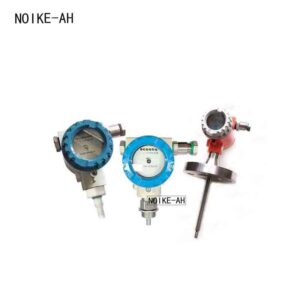
Explosion proof flow switch NK33EX
The provisions of the national standard GB on explosion-proof grade standards:
Number Explosion proof Type Code National Standard GB Explosion proof Measures Applicable Area
1 Explosion proof type d GB3836.2 Isolated ignition source
2. Increase safety type e GB3836.3 and try to prevent the generation of ignition sources
3. Intrinsic safety type ia GB3836.4 restricts the energy of ignition sources
Intrinsic safety type IB GB3836.4 restricts the energy of ignition sources
4 Positive pressure type p GB3836.5 Separation of hazardous substances from ignition sources
5. Oil filled type o GB3836.6 Hazardous substances separated from ignition sources
6. Sand mold Q GB3836.7 Separation of hazardous substances from ignition sources
7. Non sparking type n GB3836.8, try to prevent the generation of ignition sources
8 sealing type m GB3836.9, try to prevent the generation of ignition sources
9. Air tight type h GB3836.10, try to prevent the generation of ignition sources
Explosion proof flow switch manual (explosion-proof level)
Format description of explosion-proof signs:
Scientifically classify and grade the explosive hazardous media in factories or mining areas according to their ignition energy, minimum ignition temperature, and the time period of the existence of explosive hazardous gases on site, in order to determine the explosion-proof signs and forms of on-site explosion-proof equipment.
Explosion proof mark format:
Ex(ia)ⅡC T4
Explosion proof mark Explosion proof grade Gas group Temperature group
Explosion proof grade description:
IA level: Electrical equipment that cannot ignite explosive gas mixtures during normal operation, one fault, and two faults.
During normal operation, the safety factor is 2.0;
When there is a malfunction, the safety factor is 1.5;
When there are two faults, the safety factor is 1.0.
Note: Contact points with sparks must be equipped with explosion-proof enclosures, airtight enclosures, or double the safety factor.
IB level:
Electrical equipment that cannot ignite explosive gas mixtures during normal operation and a malfunction.
During normal operation, the safety factor is 2.0; When there is a malfunction, the safety factor is 1.5.
During normal operation, contacts with sparks must be protected by explosion-proof or airtight enclosures, and there should be measures for fault self display. The safety factor for one fault is 1.0
In addition, the explosion-proof certification of explosion-proof flow switches is also divided into domestic certifications
National Quality Supervision and Inspection Center for Explosion proof Electrical Products (CQST)
National Explosion proof Safety Supervision and Testing Station for Instruments and Meters (NEPSI)
China Petroleum and Chemical Industry Electrical Products Explosion proof Quality Supervision and Inspection Center (PCEC)
Certification from overseas
ATEX – European Commission; Equipment and protection systems for potential explosive environments; Directive (94/9/EC) (highly effective, internationally recognized)
CEE – International Committee for the Accreditation of Electrical Equipment
IEC – International Electrotechnical Commission
CENELEC – European Organization for Electrotechnical Standardization
ISO – International Organization for Standardization
LLOYD#39; SREGIST OF SHIPPING – Lloyd’s Register of Shipping
BASEEFA – UK Explosion proof Electrical Equipment Inspection Agency
BSI – British Standards Institute
SFA – Special Combustible Atmosphere
F M – Factory Mutual Aid Research Society
U L – Underwriters Laboratory
NEC – National Electrical Code
LCIE – French Central Laboratory
DEMKO – Danish Electrotechnical Commission
DIN – German Institute for Standardization
BVS – German Mining Equipment Inspection Agency
The main application areas of explosion-proof flow switches are:
petrochemical
Gas and liquid analyzer
biomedical instrumentation
atmosphere furnace
gas chromatograph
vacuum system
Industrial fluid pipeline
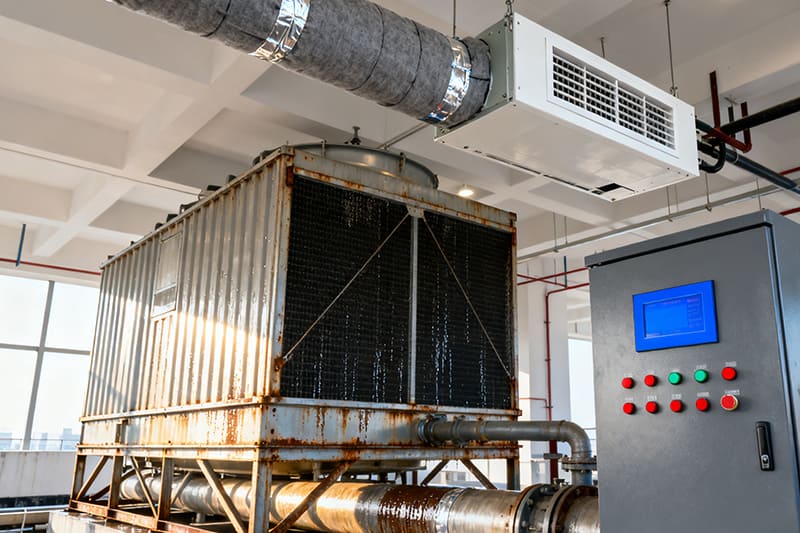
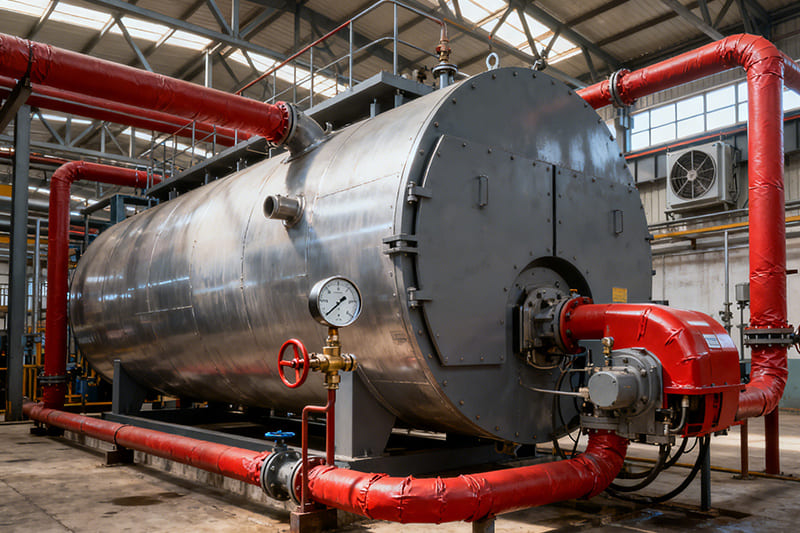
As well as other hazardous working environments, it can protect pumps, engines, or other equipment from damage caused by low flow or flow interruption. The sequential operation of pumps and other equipment can automatically start auxiliary pumps and engines. When the cooling system fails, the explosion-proof flow switch can immediately control the shutdown of the cooling engine.
You can refer to it based on the actual situation. If you encounter any confusion or unclear working conditions, you can contact the staff of NOIKE for professional answers.